
Decoding weed
Your brain is still developing until age 25, and weed can affect that development.1 From messing with your mood and memory to draining your drive, weed can get in the way of your goals and potential.


Weed & your brain
Weed contains THC (tetrahydrocannabinol)—the main psychoactive compound that creates the “high” sensation. Whether you smoke, vape, or ingest it, THC can affect multiple parts of your growing brain.
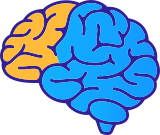
Prefrontal cortex
This is your decision-maker. This part of your brain is still developing until your mid-20s. It’s what helps you call the shots and stay in control. Using weed now can mess with that development, thinning your cortex and aging your brain faster than it should.2
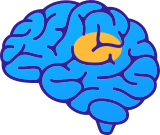
Basal ganglia
This is the part of your brain that drives your motivation with dopamine (the reward chemical that helps you get things done). Regularly using weed can mess with that supply, making it harder to feel satisfied or find the drive to meet your goals.3,4
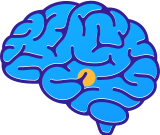
Amygdala
Think of this as your brain’s mood regulator. It’s what helps you keep calm when things get intense. Using weed can mess with how this functions, leaving you feeling less in control of your emotions.5
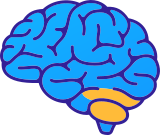
Cerebellum
This is your brain’s center for coordination. It handles your timing, balance, and precision. Using weed can throw off that stability, slowing your reaction time and messing with your coordination.5,6
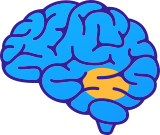
Hippocampus
This is the part of your brain responsible for learning and memory. Using weed can interfere with your brain's ability to save new information, making it harder to learn new things or form new memories.7
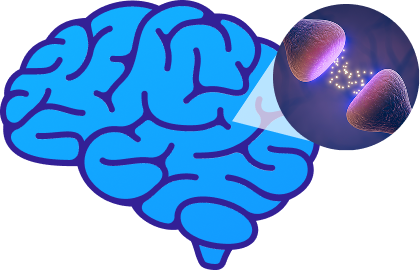
CB1 receptors
These receptors are how THC enters your system. Using weed often can wear them out, making them less sensitive. Over time, this means you may need more to feel the same effects.8
Weed & your
day-to-day
When weed affects your brain, those changes carry over into your day-to-day life.
Managing stress
When life feels stressful, weed can seem like a harmless way to cope. But it can actually backfire. Weed interferes with the amygdala—the part of the brain that regulates mood and emotions, which can make stress even harder to manage. In the long run, you end up feeling worse.
Staying motivated
Your goals require motivation, but using weed regularly can drain that motivation over time. That’s because THC interferes with your brain’s reward system and its ability to produce dopamine, the chemical responsible for your drive, satisfaction, and get-up-and-go.
Memory
Time spent with friends, your to-do list, or studying for an exam all can be affected by weed—making it harder to learn and remember. THC attaches to the receptors in your brain that handle memory, making it more difficult to save the moments that matter most.
Dependence
Using weed to feel better can actually increase the risk of developing cannabis use disorder. Key signs include building a higher tolerance, intense cravings, and trying but failing to quit.9 Ongoing use can also have life-long impacts on health, learning and memory.